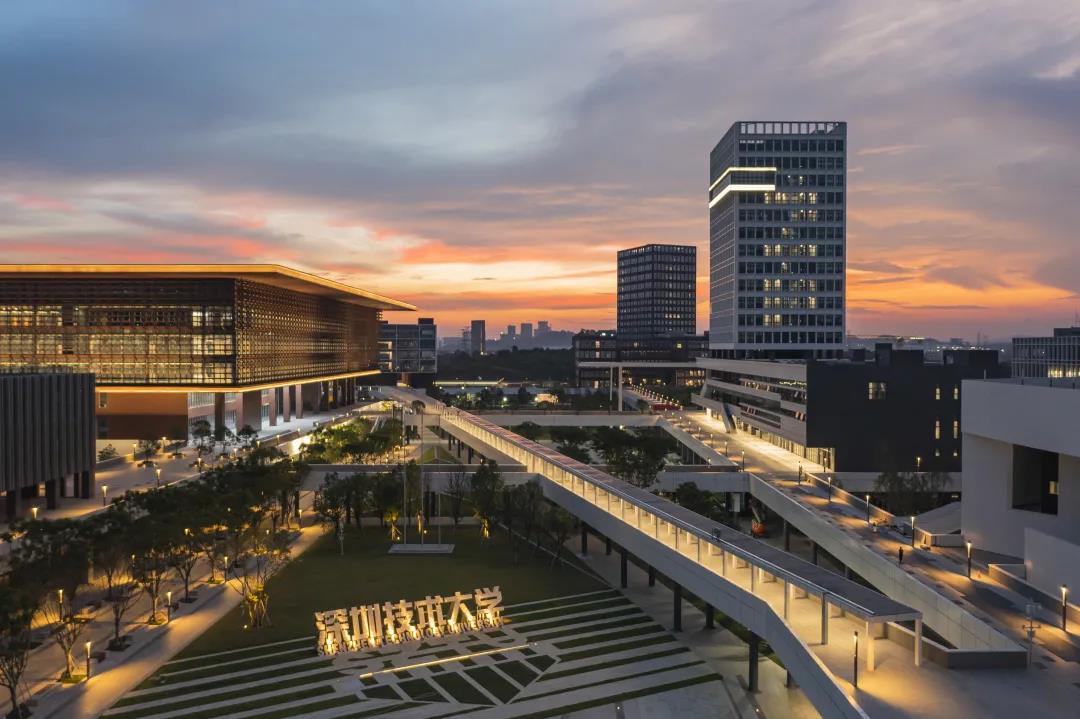
On the afternoon of 26 October, John Michael Kosterlitz, Nobel Laureate in Physics, Member of the National Academy of Sciences of the United States and Professor of Physics at Brown University, visited Shenzhen Technology University and delivered a public lecture entitled “A Wander from Physics to the Nobel Prize”. The event enabled direct academic exchanges between the distinguished physicist and faculty members and students on campus. A group of renowned scholars, together with Chen Qiuming, Secretary of the CPC Committee, Shenzhen Technology University, as well as faculty and student representatives from the College of Integrated Circuits and Optoelectronic Chips, attended the session.
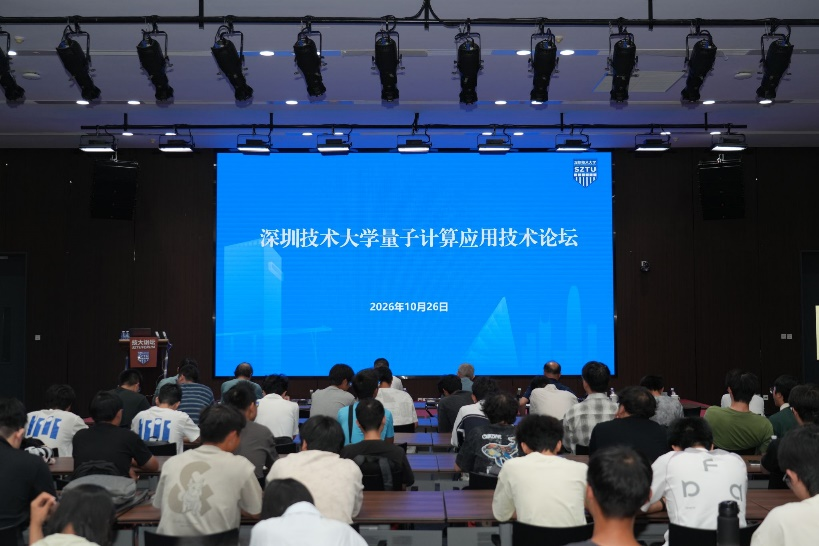
Forum scene of the SZTU Forum on Applied Quantum Computing [Photo/Party Committee Publicity Department]
Chen Qiuming extended a warm welcome to Professor Kosterlitz on behalf of the university community. He noted that Professor Kosterlitz is a distinguished scholar in condensed matter physics and statistical physics. His theoretical discoveries have reshaped fundamental understandings of the states of matter and laid the theoretical foundation for frontier research fields including topological quantum computing, two-dimensional materials and superconductivity. Chen expressed anticipation that this lecture would serve as a starting point for sustained collaboration between the university and Professor Kosterlitz’s research team in fundamental research and talent cultivation. He also encouraged SZTU students to embrace the scientific ethos of pursuing authentic research questions and stay persistent in scientific exploration.
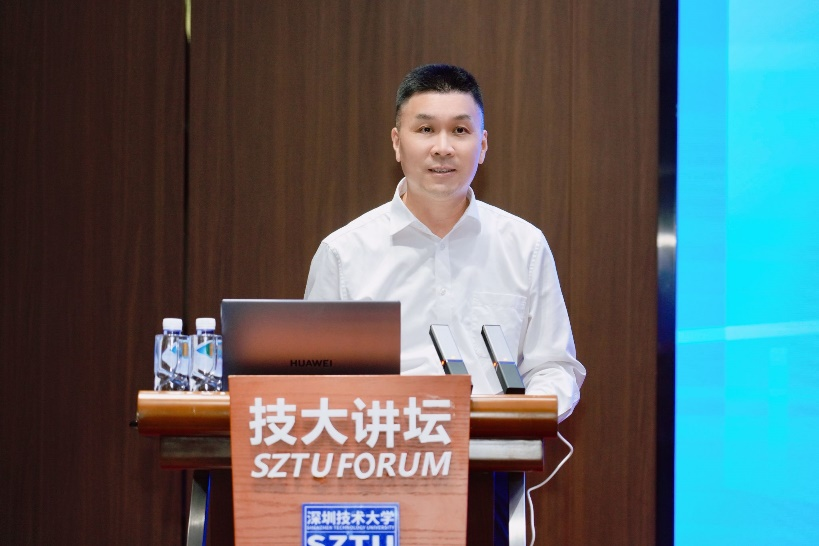
Chen Qiuming, Secretary of the CPC Committee of Shenzhen Technology University, delivers remarks at the lecture [Photo/Party Committee Publicity Department]
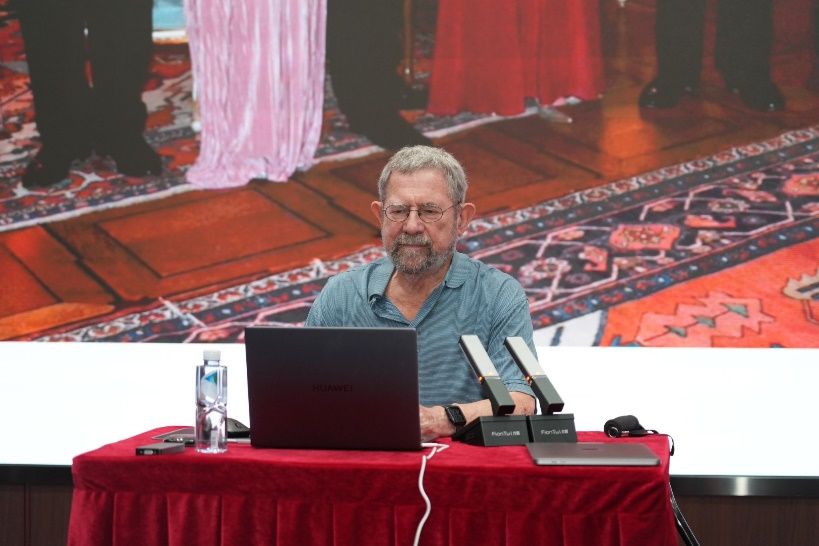
John Michael Kosterlitz, Nobel Laureate in Physics [Photo/Party Committee Publicity Department]
Born in 1943, John Michael Kosterlitz is a British-born American condensed matter physicist. He completed his undergraduate and postgraduate studies at the University of Cambridge and obtained his doctoral degree from the University of Oxford. Following postdoctoral appointments at the University of Birmingham and Cornell University, he joined the faculty of Brown University in 1982 and has served on its faculty ever since. In 2016, he was awarded the Nobel Prize in Physics jointly with David J. Thouless and F. Duncan M. Haldane for theoretical discoveries of topological phase transitions and topological phases of matter.
During his lecture, Professor Kosterlitz recounted milestones across his academic career in an accessible, conversational tone. He drew parallels between his long-standing passion for rock climbing and scientific research, arguing that perseverance and innate curiosity constitute core attributes for researchers. He recounted his landmark investigations into the Berezinskii–Kosterlitz–Thouless (BKT) transition completed in the early 1970s, research for which he received the Nobel Prize more than four decades afterward. The professor elaborated on the BKT transition with plain-language explanations of its core logic and experimental validation, linking his personal experience to his fundamental physics research.

Faculty and student representatives from CIOC attend the public lecture [Photo/Party Committee Publicity Department]
An interactive question-and-answer session followed the keynote address, at which faculty and students raised questions on frontier research topics. Professor Kosterlitz responded to inquiries with thorough patience and urged young scholars and students to pursue bold exploration and innovation.
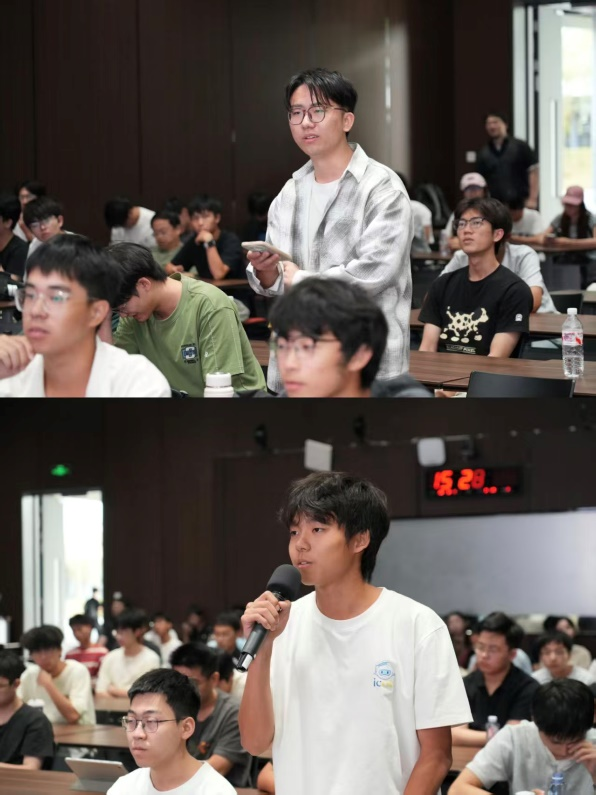
Q&A session of the public lecture [Photo/Party Committee Publicity Department]
Concurrent with the keynote lecture, the SZTU Forum on Applied Quantum Computing featured presentations delivered by a panel of distinguished researchers. Their presentations spanned a broad spectrum of interdisciplinary frontiers, including endogenous network theories for complex diseases, fractional quantum states, quantum biology, quantum artificial intelligence and nonlinear dynamics within neural regulatory networks. The forum brought together perspectives from multiple disciplines to outline pathways for industrial innovation empowered by quantum technologies.
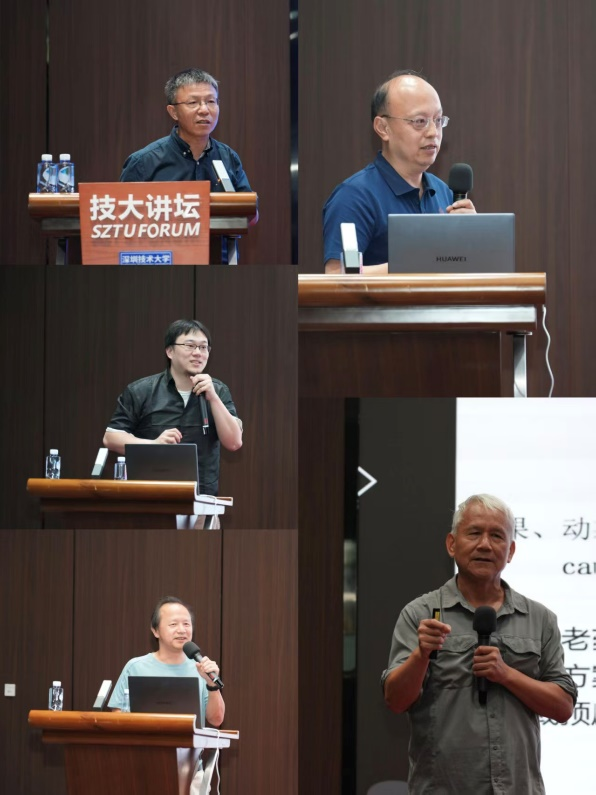
Presentations by scholars at the SZTU Forum on Applied Quantum Computing [Photo/Party Committee Publicity Department]
Drafted by Hallie(何雨静)/ School of Foreign Languages
Revised by Olivia(赖丽伟)/ International Cooperation and Exchanges Department
Edited by Olivia(赖丽伟)/ International Cooperation and Exchanges Department