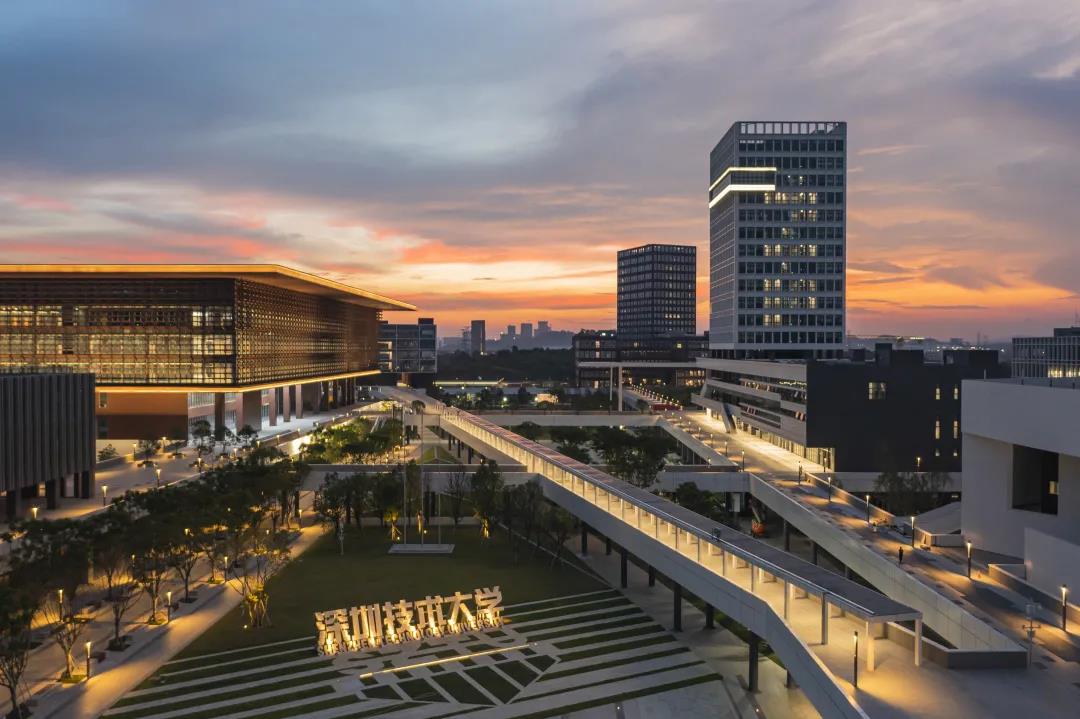
As the China–Russia friendship continues to gain momentum through exchanges in technology and culture, the International Cooperation and Exchanges Department of Shenzhen Technology University (SZTU) organized the “Encounter Pengcheng, Moving Forward Together” Study and Exchange Program for Russian youth recently. A total of 14 teachers and students from Saint Petersburg and Russia participated in the seven-day program at SZTU. The initiative marks the university’s first study program specifically designed for Russian students and a concrete step in implementing the important consensus reached by the heads of China and Russia in May 2025, as well as an active response to the “China–Russia Years of Education” initiative.
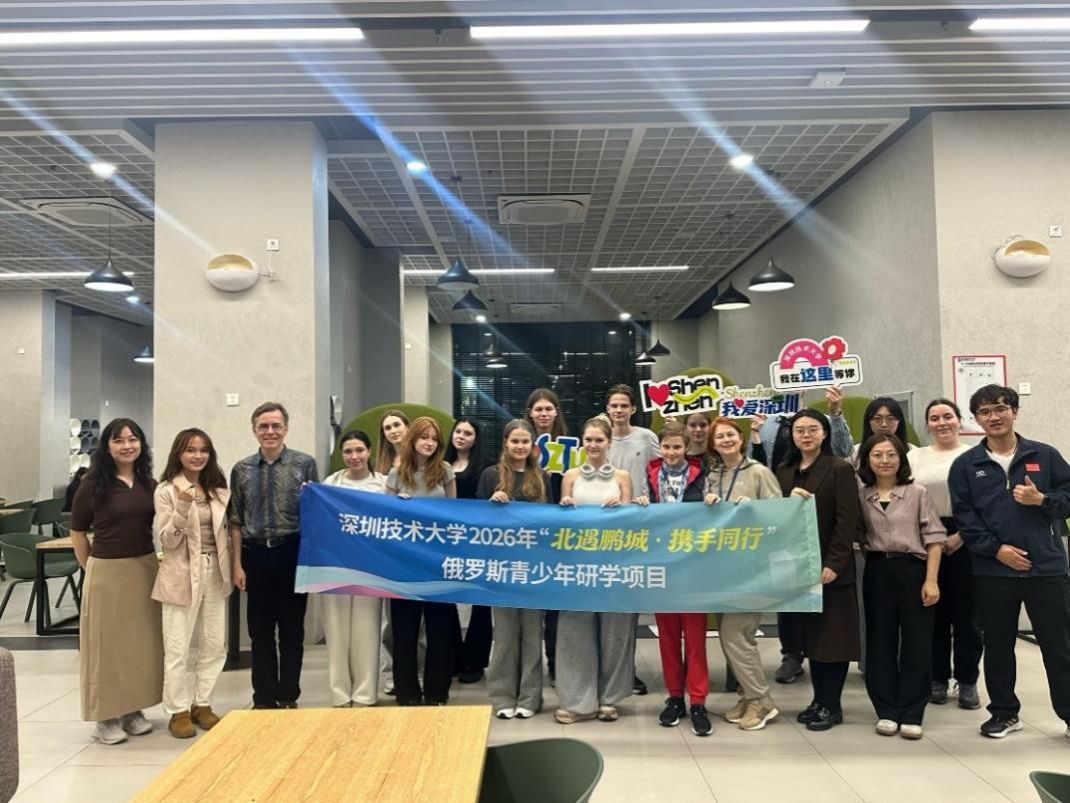
Participants and teachers of the study program [Photo/International Cooperation and Exchanges Department]
To help participants better understand China and develop a deeper appreciation of Shenzhen, the program featured a carefully designed curriculum. In Chinese language classes, instructors introduced the evolution of Chinese characters and fundamental grammatical structures through illustrative examples, helping students overcome language barriers. In calligraphy and painting sessions, participants engaged in hands-on practice, gaining insight into the distinctive features of traditional Chinese art and culture.
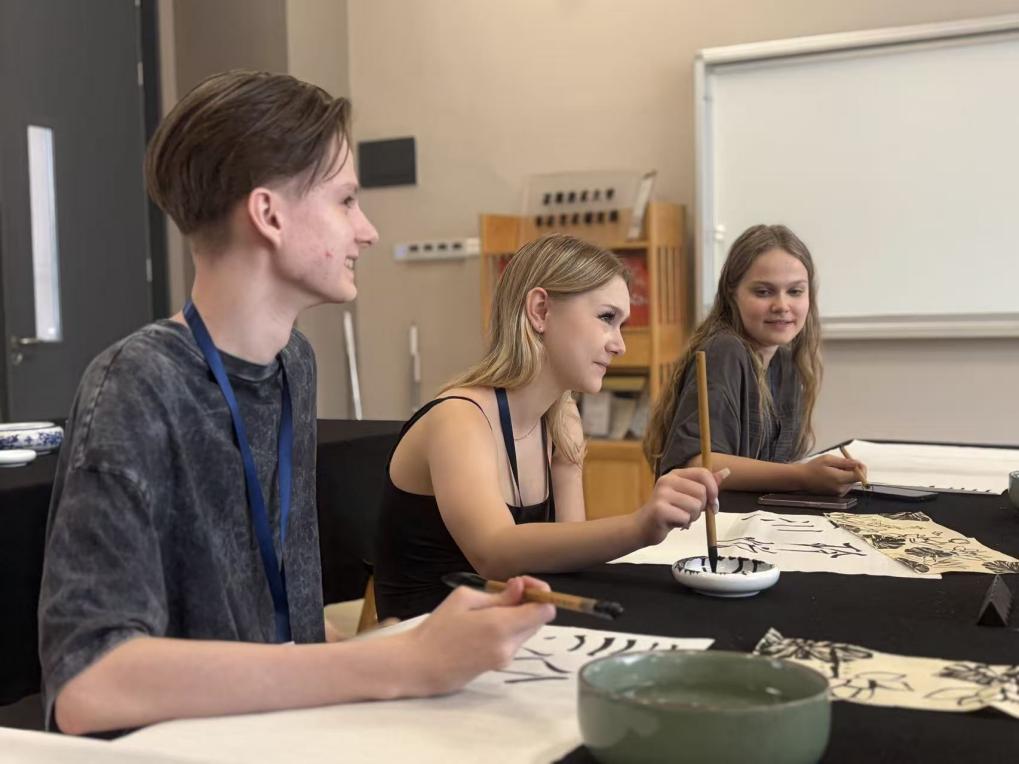
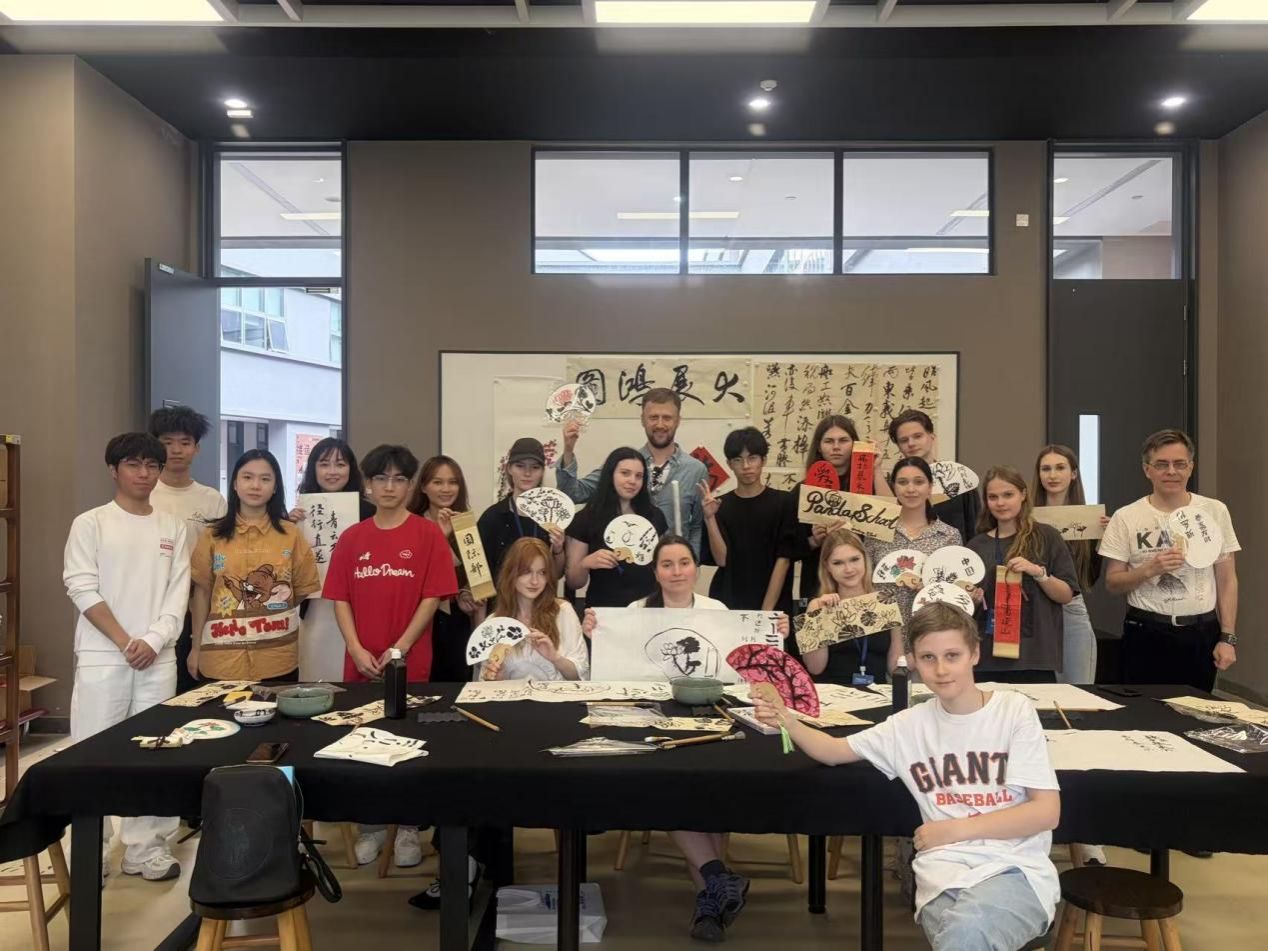
Russian students attended the calligraphy and painting lesson. [Photo/International Cooperation and Exchanges Department]
Technology knows no borders, and innovation drives a shared future. In addition to programming courses focused on fundamental logic and algorithmic thinking, the program established a practice-oriented teaching model integrating laboratories, studios, and leading enterprises. On campus, the robotics laboratory became one of the most popular learning venues. Participants observed the operation of quadruped robotic systems and took part in hands-on activities, gaining a more direct understanding of technological applications.
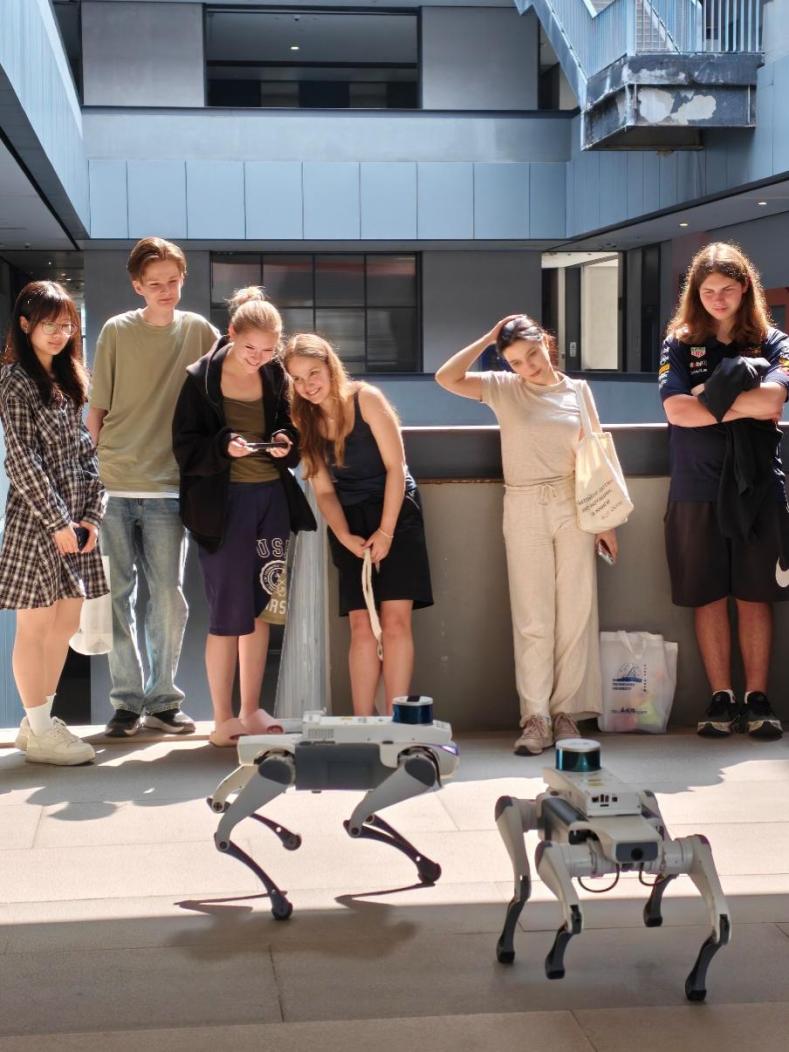
Robot show during the study program [Photo/International Cooperation and Exchanges Department]
In the racing workshop and drone laboratory, students worked in teams to conduct simulation exercises and technical practice. Through parameter adjustment, feedback analysis, and collaborative problem-solving, they developed a practical understanding of algorithmic logic and engineering principles. The program also included a visit to Han’s Laser, where participants observed the real-world application of advanced manufacturing technologies such as laser cutting and welding. These activities facilitated a closer connection between academic learning and industrial practice, broadening students’ perspectives on technological development and innovation.
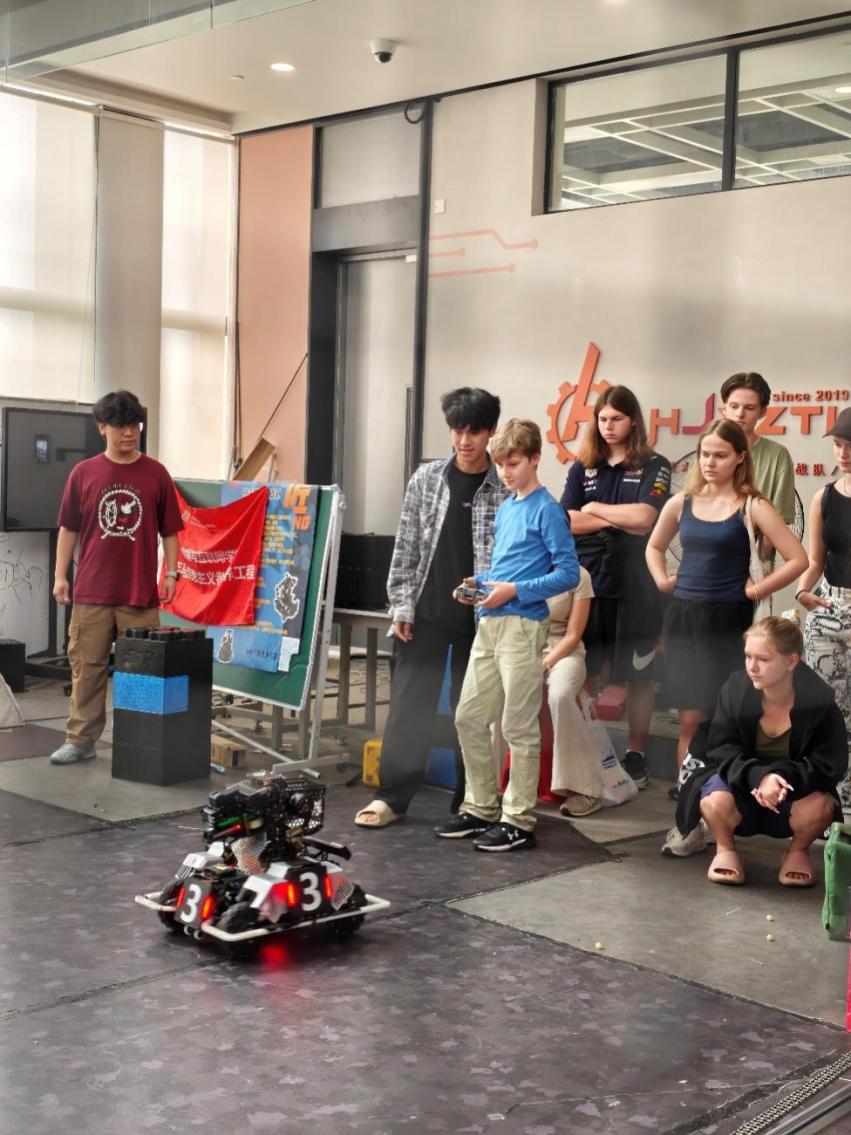
Lab tour at the School of Artificial Intelligence [Photo/International Cooperation and Exchanges Department]
During off-campus visits, the group explored the Pingshan Cultural Cluster, where museums highlighted Shenzhen’s transformation from a small border town into a modern international metropolis. During a visit to Dameisha Seaside Park, participants experienced the city’s openness, inclusiveness, and ecological vitality.
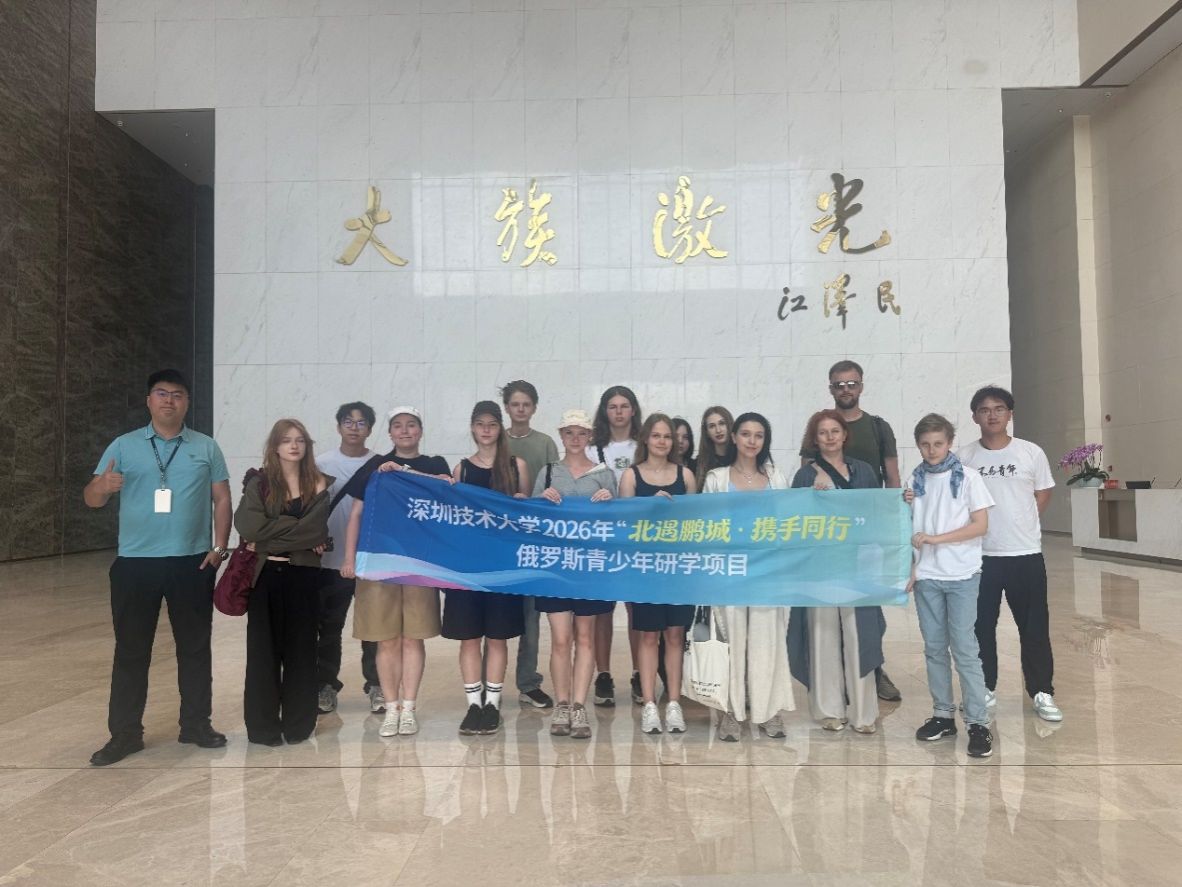
The Russian students visited Han’s Laser [Photo/International Cooperation and Exchanges Department]
In a letter of appreciation, the Russian participants stated that the program not only provided valuable opportunities to broaden horizons and enhance knowledge, but also served as an important platform for promoting mutual understanding and friendship between Chinese and Russian youth. They expressed the hope that both sides would expand exchanges and cooperation across a wider range of fields in the future, jointly contributing to the development of China–Russia educational collaboration.
A Russian student, Ariadna, said that although the program lasted only seven days, it was highly rewarding. She noted that it was her first visit to Shenzhen and that she was impressed by the city’s technological development and vitality. She added that the modern campus and advanced laboratories at SZTU left a strong impression for her, and that the well-structured program provided valuable learning experiences. She said the experience had broadened her perspective on the future and that she would seriously consider returning to pursue further studies.
Drafted by Chen Hai(陈海)/School of Foreign Languages
Revised by Olivia(赖丽伟)/ International Cooperation and Exchanges Department
Edited by Olivia(赖丽伟)/ International Cooperation and Exchanges Department